Asenath Exchanges Bodies with Derby
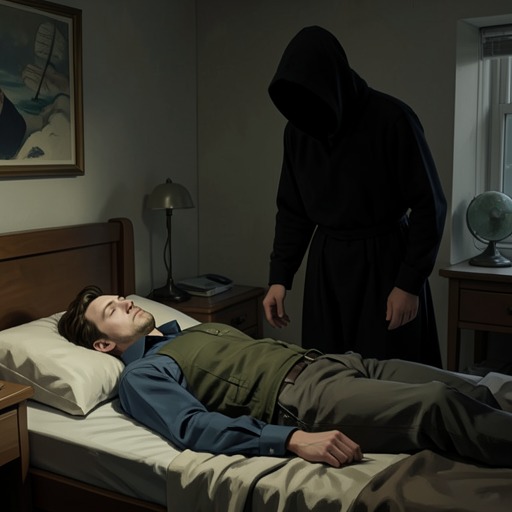
The Thing on the DoorstepAsenath Waite Exchanges Bodies with Derby is a recurring act of supernatural identity displacement at the center of Asenath Waite and Edward Pickman Derby’s marital conflict. As Daniel Upton learns from Edward’s account, Asenath takes Edward’s body to travel and attend secret rites, leaving him in hers; their positions may later reverse without warning. The episodes undermine the assumption that a familiar face reliably identifies the person acting through it, and make Edward’s struggle to retain his identity inseparable from the question of who is present in his body.
Background and Early Signs
During the first years of the marriage, Edward became increasingly secretive about his occult studies and reluctant to discuss Asenath. Other people noticed a change in his behavior, though they could not identify its cause. At times he appeared unusually decisive, driving Asenath’s powerful Packard with a mastery and confidence unlike his customary indecision. These episodes often coincided with trips, usually in the direction of Innsmouth. On other occasions, after setting out at the wheel, he returned listless in the back seat while a hired chauffeur or mechanic drove.
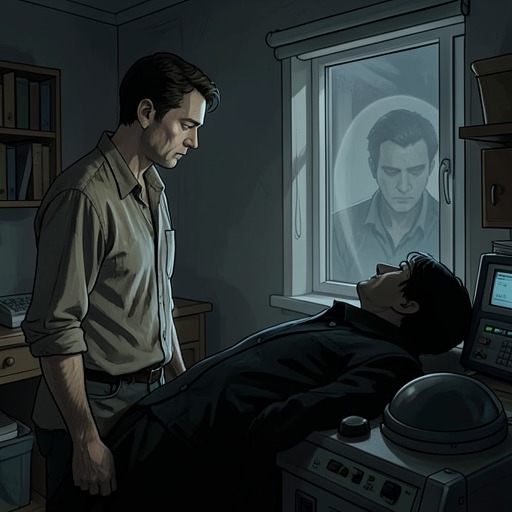
The contrast was not simply between Edward’s ordinary conduct and occasional confidence. Observers thought that the assured figure behind the wheel resembled Asenath, or even her father, Ephraim Waite. The distinction between the two apparent temperaments became more striking as Edward otherwise seemed to grow more childish, while flashes of sadness or understanding crossed his face. A caller at the Crowninshield House once saw a confident-looking Edward drive away, then glimpsed a pained, defeated face at a library window. The face appeared to be Asenath’s, but its eyes seemed to belong to Edward. The scene did not establish what had happened, yet it made visible the mismatch between outward appearance and inward identity that Edward would later describe.
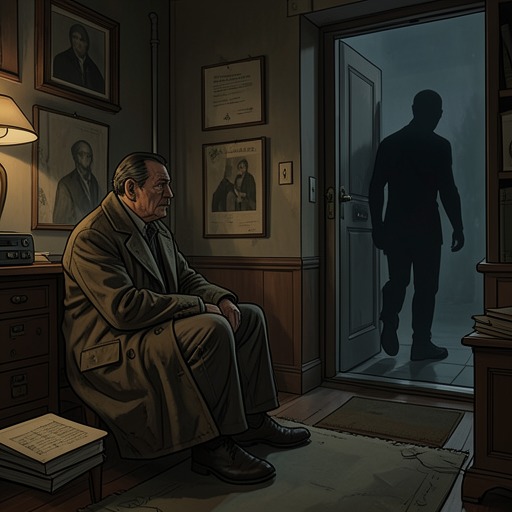
By the third year of the marriage, Edward was hinting to Daniel Upton that events had gone too far and that he needed to regain his identity. Upton recalled earlier reports of Asenath’s hypnotic influence over other students, who had imagined themselves looking at their own bodies from elsewhere. Those reports gave him a frame for Edward’s alarm, but not a clear explanation. Edward’s later account would connect his fear to repeated exchanges in which neither body could be assumed to house the person whose face it carried.
The Recurring Exchanges
As Edward described the pattern, Asenath took his body and went to unknown places for rites, while Edward was left in Asenath’s body, sometimes locked upstairs. Her control did not always last. At times Edward found himself abruptly back in his own body in a remote and frightening location; at other times Asenath regained control. When stranded, he had to find his way home, sometimes locating the car and persuading someone to drive it. The changes therefore affected more than appearance: they left Edward without reliable control over his movements, his whereabouts, or the body through which he encountered the world.
Edward believed that Asenath’s periods of control were growing longer. He understood her purpose as a desire to become a man and, in her view, fully human. He said she had recognized the combination of an unusually fine intellect and a weak will in him, and feared that she would eventually displace him altogether, leaving him in her body while she disappeared in his. His account also connected this ambition to the Innsmouth ancestry and to Ephraim Waite’s occult knowledge. Edward suspected that Ephraim had sought to preserve his life through a terrible occult act and said that a successful demonstration had already occurred; the account offers his suspicion, not an independently confirmed explanation of that earlier event.
The recurring exchanges also help explain the contradictory reports of Edward’s physical and psychological state. During one journey with Upton, Edward spoke of Asenath’s control as a long-running pattern. Upton noticed that Edward seemed physically harder and more normally developed than usual, as if he had been active in unfamiliar ways, even while his mind appeared distressed. This observation did not verify every element of Edward’s explanation, but it echoed the wider pattern: the body’s condition and actions could seem to belong to a different life from the one observers associated with Edward.
The Journey from Maine
The journey from Maine became the clearest specific exchange in Edward’s account to Upton. Edward said that, while he was trying to explain what Asenath was doing, she took control and drove him out of his body. His next recollection was of being back at the house, in Asenath’s body, in the library, where servants had confined him. He told Upton that the person Upton had ridden home with was Asenath occupying Edward’s body, not Edward himself.
This disclosure retrospectively changed the meaning of an earlier car ride. Upton had noticed a difference but had struggled to accept Edward’s explanation, which seemed indistinguishable from delusion. The confident driving and the altered expressions reported by other witnesses had already suggested that the same appearance could accompany sharply different behavior. Edward’s story supplied a cause for that discrepancy, while Upton’s observations supplied limited circumstantial support. The account remains filtered through a frightened and distressed speaker, so the exchange is presented as Edward’s explanation rather than as a detached record of an occult mechanism.
Resistance and Stakes
Edward said that he had tried to resist by appearing compliant while quietly planning a way out. He believed Asenath could sense his general mood of rebellion but could not read his thoughts literally or in detail, giving him an opportunity to prepare. He also said he had occult defenses he had kept from her. In his telling, her departure for New York followed a confrontation in which he made her promise to stop preying on him and stay away. He understood the separation as a reprieve, not proof that the underlying danger had ended.
The threatened culmination was Hallowmass. Edward feared that a rite and sacrifice beyond Chesuncook would make the exchange permanent: Asenath would become Edward, while Edward would remain in Asenath’s body. He believed she would then be able to live as a man and that he might be killed or otherwise removed from her former body. The episode thus links the intermittent exchanges to a final struggle over whether identity can be permanently transferred, rather than merely displaced for a journey.
Narrative Significance
The exchange gives a concrete form to Edward’s fear of losing his identity: other people see a face, a driver, or a familiar body, but those signs no longer guarantee who is acting. The recurring alternation also turns ordinary evidence into uncertainty. A confident Edward behind the wheel may be Asenath; a face at a window may look like Asenath while conveying Edward’s distress. Upton’s gradual reinterpretation of these observations makes the reader share, rather than immediately resolve, that uncertainty.
The event is narrated retrospectively through Upton’s account of Edward’s disclosures and Upton’s own observations. That structure preserves a tension between testimony and corroboration: Edward gives a detailed explanation, and several changes in behavior seem to fit it, but Upton initially doubts him and the supernatural process is not independently demonstrated. Within that uncertainty, the exchanges mark a decisive shift in the marriage. Edward’s concern is no longer simply that Asenath influences him; he fears that she can occupy his body, leave him displaced, and ultimately make the separation permanent.